🏔️ HALF TO PEAK 2026 | 3rd Edition

A fully unsupported off-road ultra-distance event

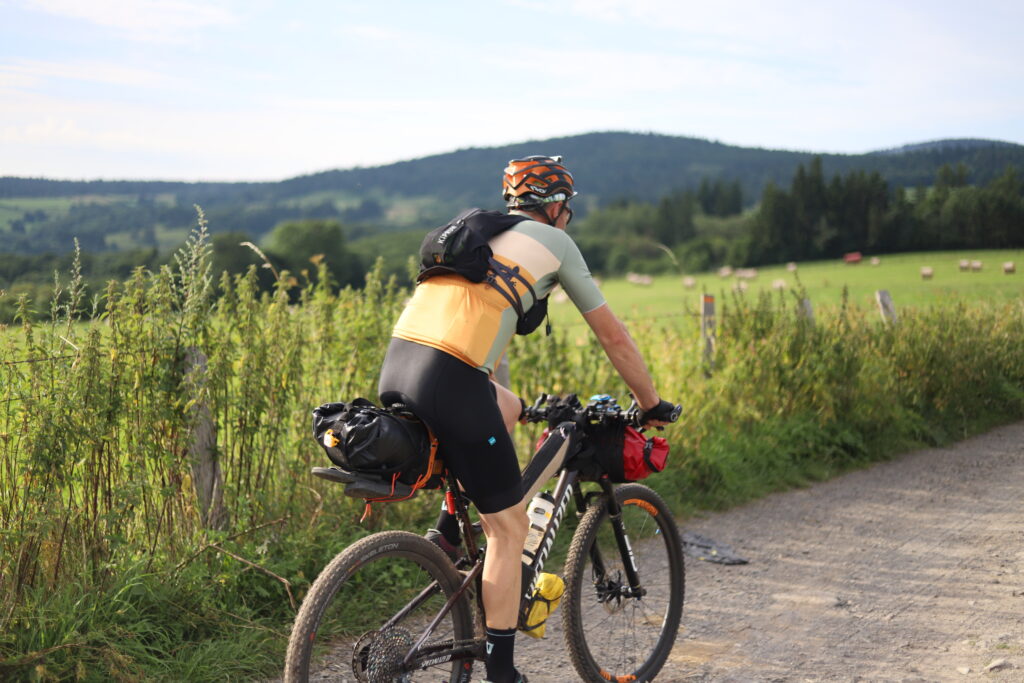
The Half To Peak, the little sister to the Sea To Peak, is back for its 3rd edition! It is the perfect format for those who are short on time or who want to experience the sheer intensity of ultra-bikepacking in a more accessible format, without making any compromises on the beauty and technicality of the terrain.

The concept? You jump onto the Sea To Peak route right at its halfway mark to share the exact same legendary final section. Along the way, you will even catch up with the riders who set off from Brittany a week earlier!

📝 Founding Principles

Live Tracking: Every participant is equipped with a GPS tracker, allowing the organization and your loved ones to follow your progress live.

Bikepacking & Ultra-distance: A demanding journey into the heart of wild nature.

Unsupported (Self-Sufficient): A human adventure where you can rely only on yourself.

Non-competitive: There is no official ranking. Your only opponent is yourself. The goal is to push your limits and experience an extraordinary adventure.

Non-stop Progression: The clock never stops ticking. You are entirely free to manage your own strategy, riding times, and sleep schedule.
🗺️ The Route: From Volcanoes to the Alps

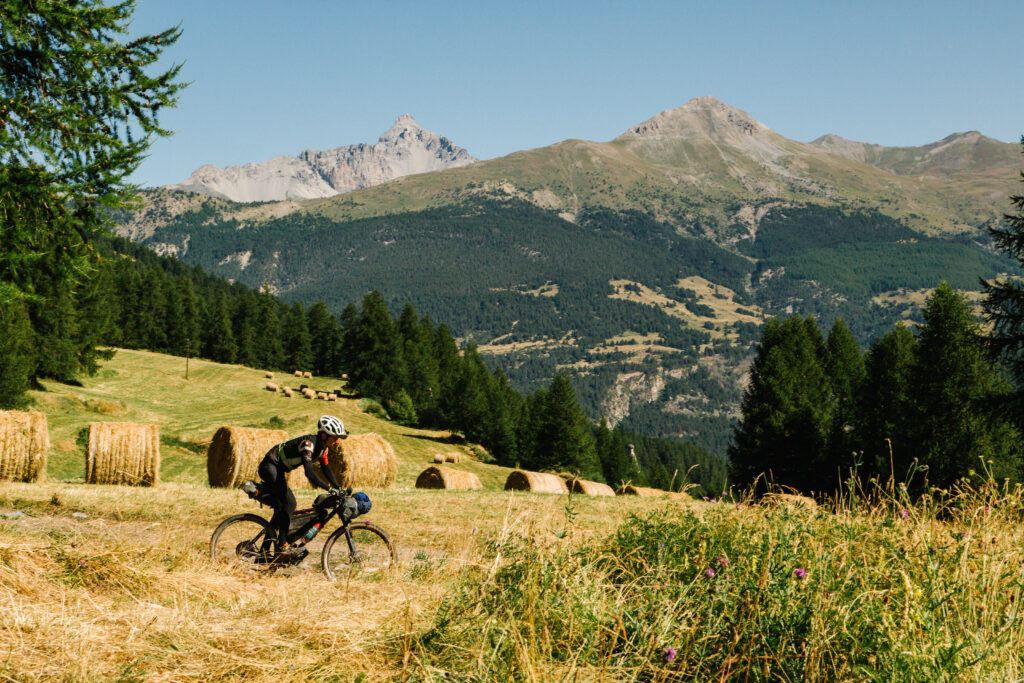
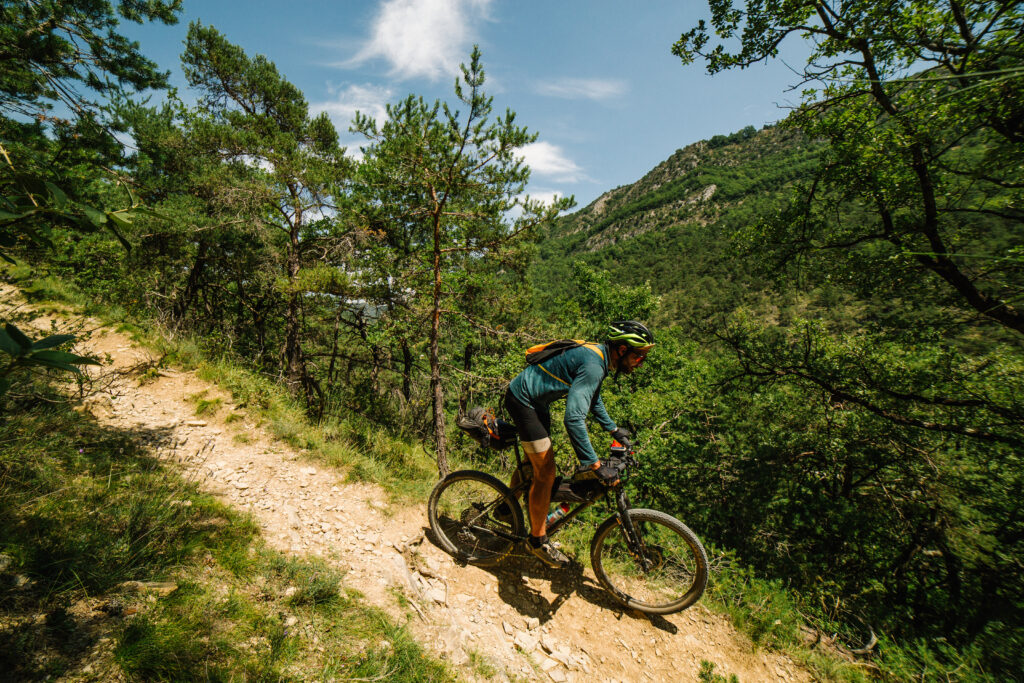
A pure off-road route that throws you right into the thick of it. You will cross some of France’s most beautiful landscapes, from the heart of the Auvergne Volcanoes all the way to the mythical peaks of the Alps. A mountainous, demanding, and spectacular profile that will leave you with unforgettable memories.

To officially finish the event, you must strictly follow the provided GPS track and check in at the various checkpoints (CPs) set up by the organization.

⏱️ Key Info & Schedule

  • 🚀 Grand Start: Saturday, July 25, 2026, at 6:30 AM
  • 🏁 Final Time Cut-off: Sunday, August 2, 2026, at 8:00 PM (surrounded by Alpine peaks)
  • Maximum Time Limit: 8 and a half days to complete the course.

⚠️ Important: You cannot improvise on the Half To Peak. The Rider’s Guide contains all vital information and event regulations. Reading it is mandatory before registering.
🗺️ THE ROUTE | Half To Peak 2026

A week of pure adventure, from the Auvergne Volcanoes to the peaks of the Queyras

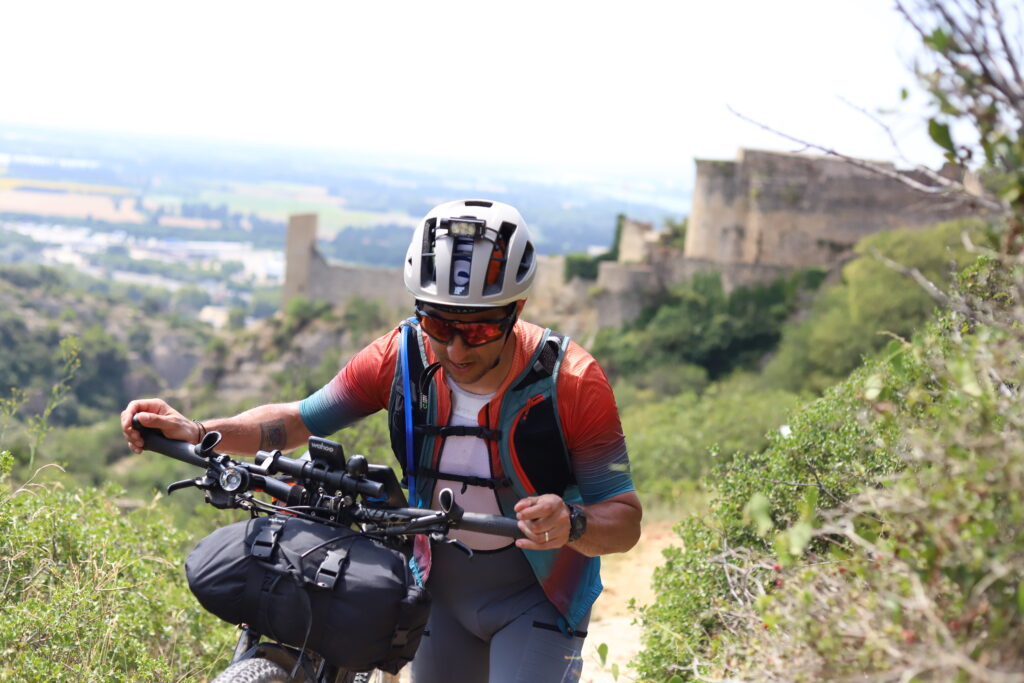
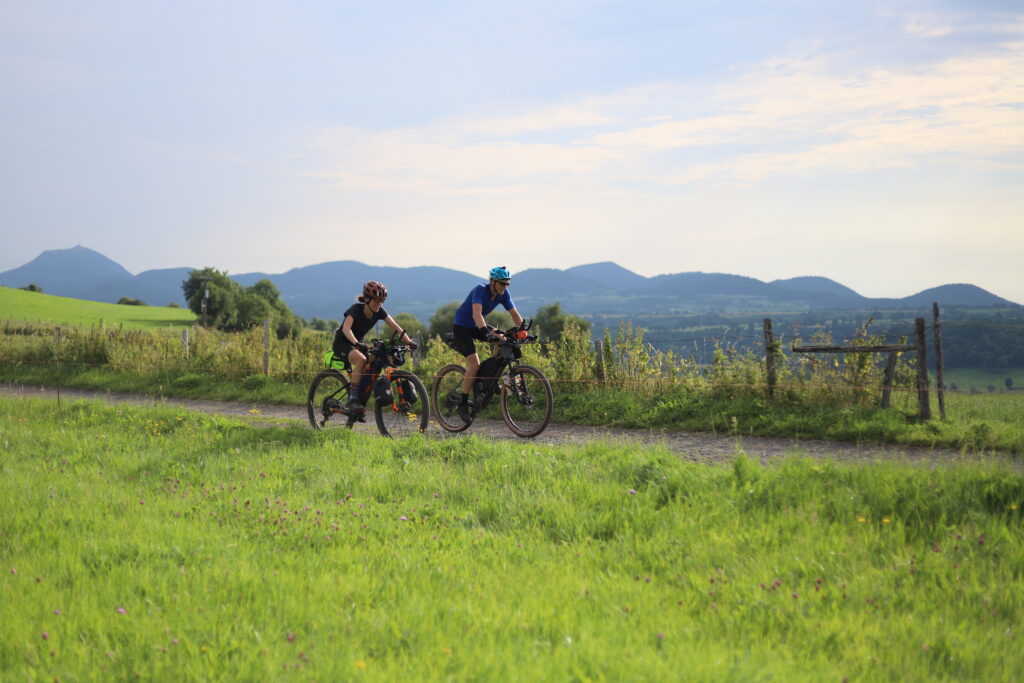
The Half To Peak route faithfully follows the second half of its big sister, the Sea To Peak. Approved and highly praised by the vast majority of riders during the first two editions, this track is magnificent, wild, and perfectly balanced: every single tough climb is rewarded with a breathtaking viewpoint or an unforgettable trail.

📊 Key Figures

📉 Altitude: A mid- and high-mountain event. The route constantly evolves above 600/700 m (with an average elevation of 900 m) and tops out at an altitude of 2,400 m.

🏁 Validation: 2 intermediate checkpoints (CPs) to clear before the finish line.

📏 Distance: ~1,040 km

⛰️ Elevation Gain: ~24,000 m D+ (average calculated across 5 different mapping software platforms).

🌍 Territory: 2 regions and 8 departments crossed.
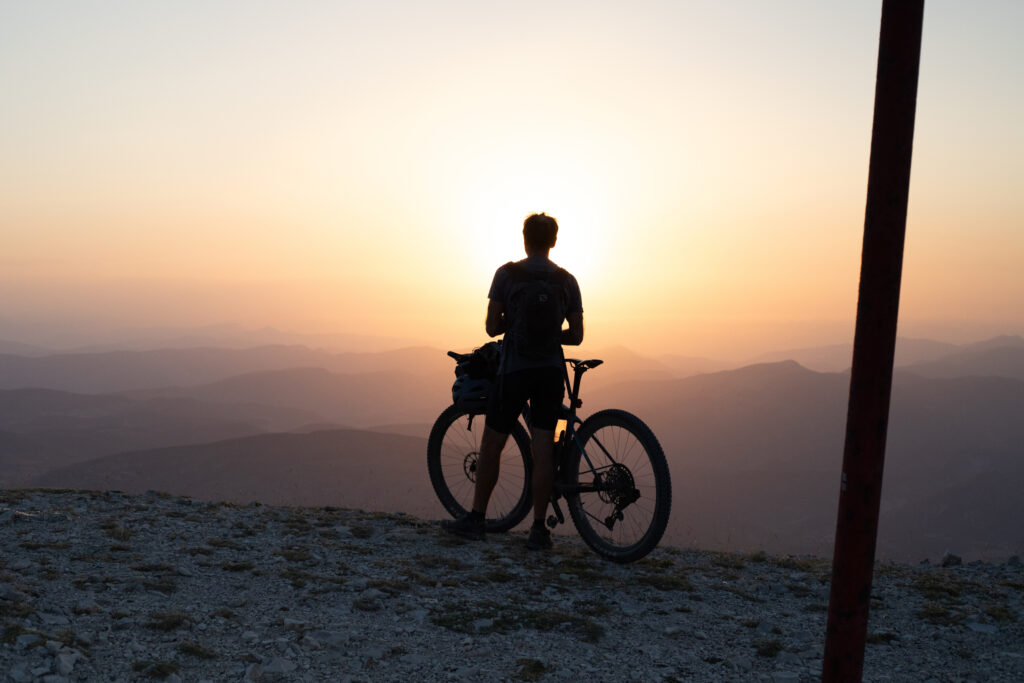
🪨 A Route of Peaks Across Two Mountain Ranges

The route chains together two French mountain ranges with distinct geologies: the Massif Central and the Alps. It is a concentrated dose of legendary peaks and breathtaking panoramas.

🌋 1. Auvergne and the Massif Central

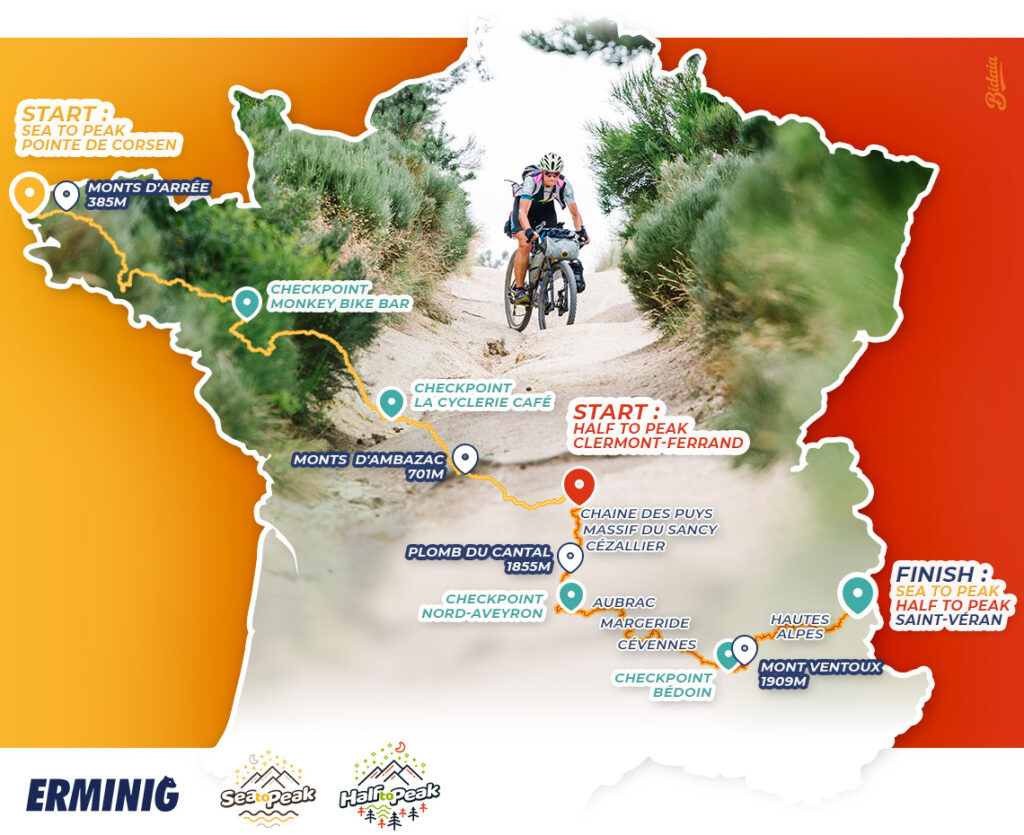
The grand start takes place in Pontgibaud (63), just a few kilometers from Clermont-Ferrand, at the foot of the Chaîne des Puys. The track immediately plunges southward:

  • Crossing the Chaîne des Puys and the wild lakes beneath the Sancy massif.
  • Riding through the Cézallier plateau and tackling the Plomb du Cantal, the roof of the Cantal mountains.
  • An absolute crush guaranteed for the vast, rolling expanses of the Aubrac.
  • A long, forested section across the high plateau of the Margeride.
  • An west-to-east crossing of the wild Cévennes, leading straight into the southern Ardèche.
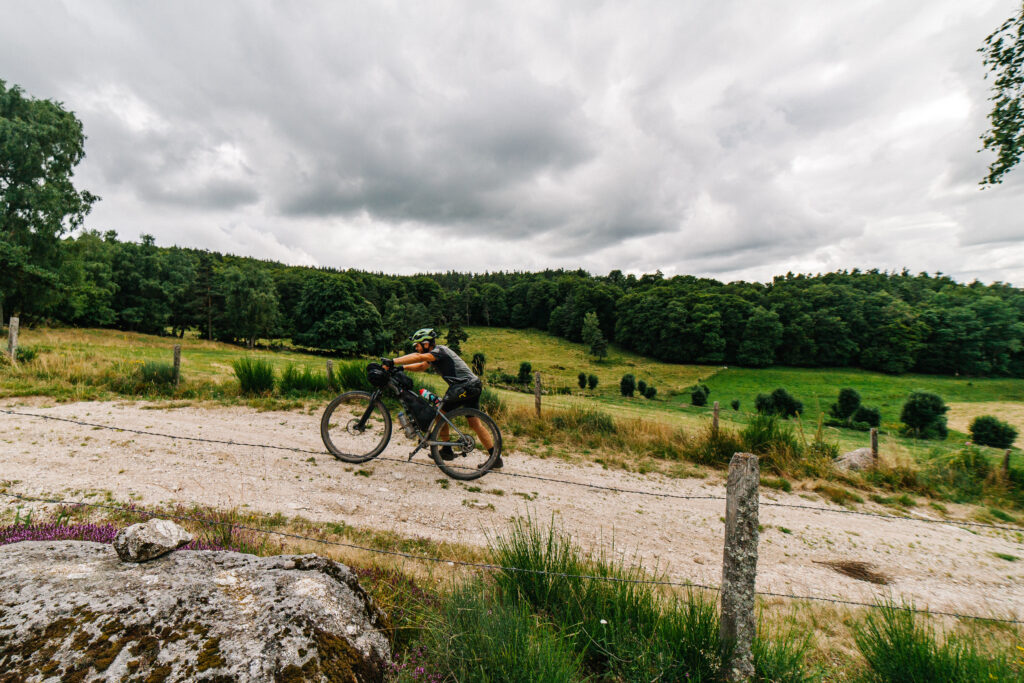
🏔️ 2. The Giant of Provence and the Alps

After a short transition and crossing the Rhône Valley south of Bollène, the profile changes radically:

  • The Mont Ventoux: The Giant of Provence looms right ahead of you. You will tame it via a memorable climb… taking the dirt tracks all the way to the summit!
  • A technical crossing of Drôme Provençale.
  • Entering the Hautes-Alpes through the sumptuous Agnielles gorges in the Buëch region.
  • Riding along the heights of the Gapençais, followed by a section near Embrun and its lake.
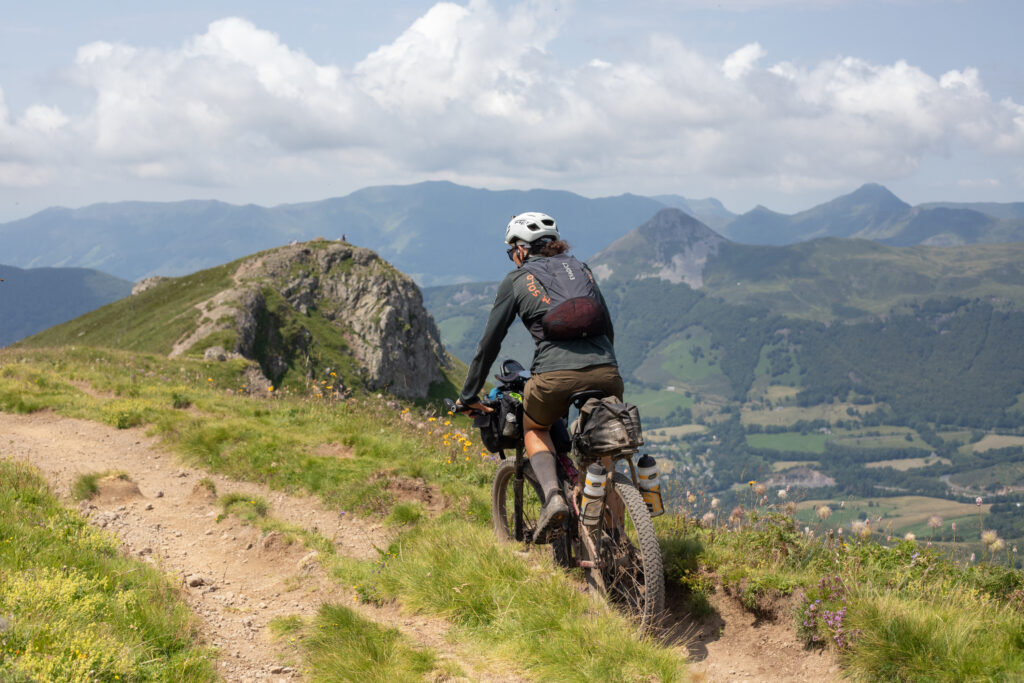
  • The Col de Valbelle: The roof of the route. A true “judge of peace” climb rising to an altitude of 2,400 meters above Risoul.
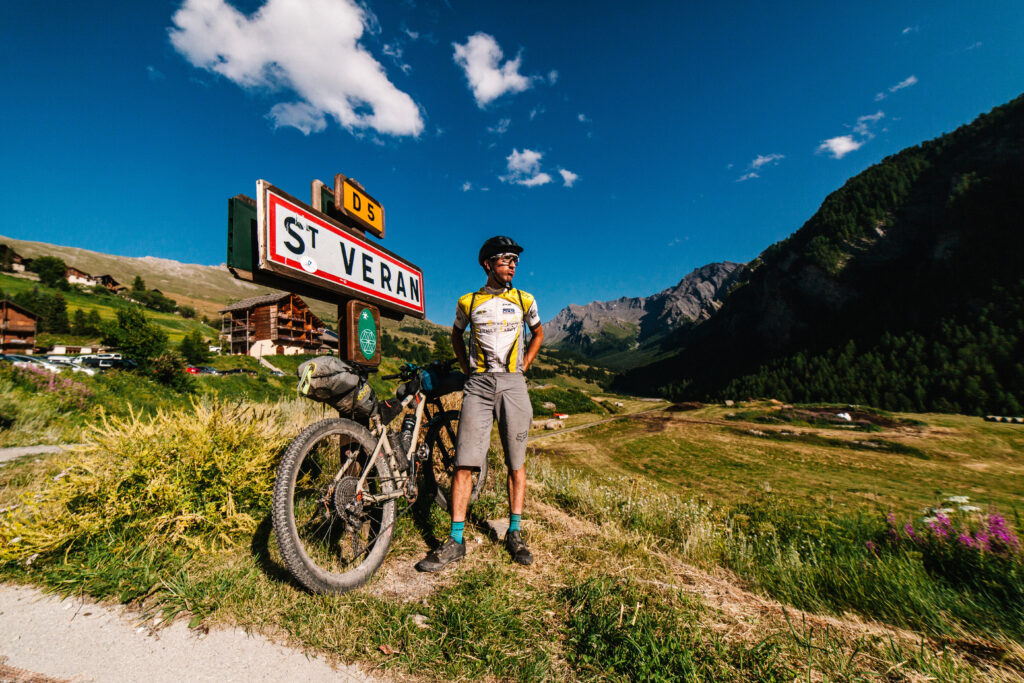
  • The magical finale tips over above Château-Queyras to come to an end in the valley of Saint-Véran (05), the highest village in Europe at an altitude of 2,042 meters.
⚠️ Technical & Weather Requirements

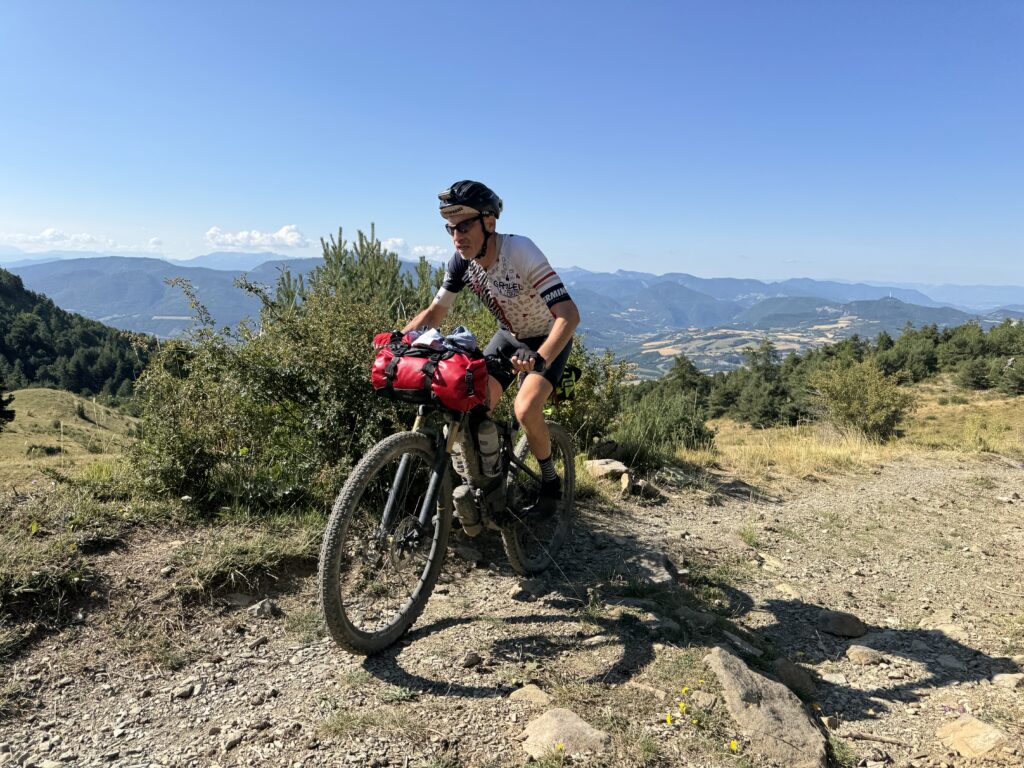
  • MTB / Monster Cross Terrain: The route is heavily off-road oriented. Tracks vary from small paved country roads and smooth, rolling forest gravel tracks to technical, rocky, and rugged alpine singletracks.
  • Weather Management: Riding at high altitudes (up to 2,400 meters) means dealing with highly unpredictable conditions. You must imperatively carry proper technical gear to cope with sudden temperature drops, mountain thunderstorms, or heavy rain.

🛰️ Club Spirit

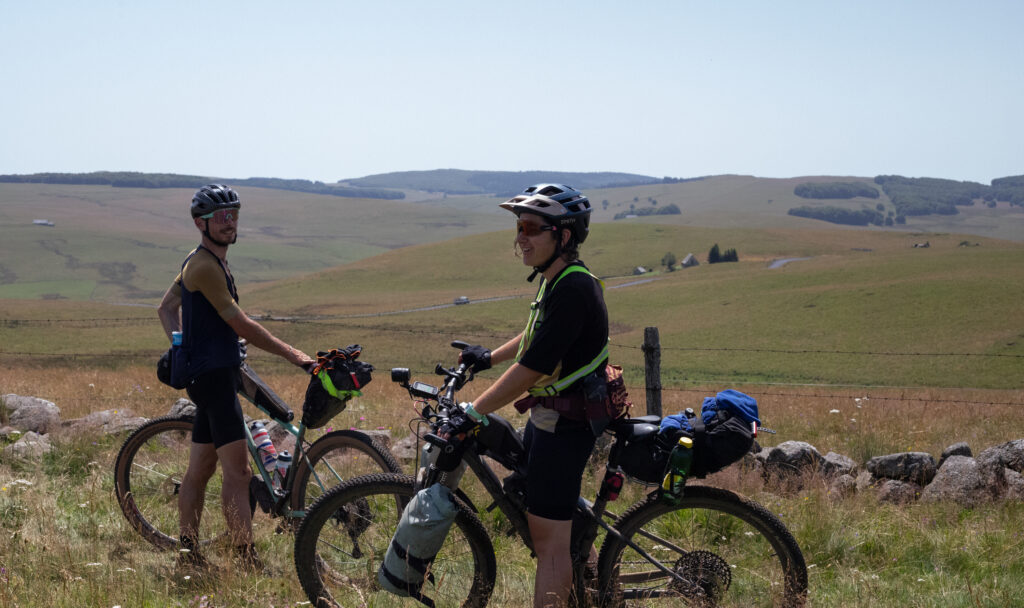
By taking the start in Pontgibaud (the exact midpoint of the Sea To Peak), you will join the long-distance riders on the trail who set off from Brittany a week earlier. This is a fantastic opportunity to share some miles together through the Alpine finale!

(The finalized GPX track will be shared with you at least 10 days before the start).
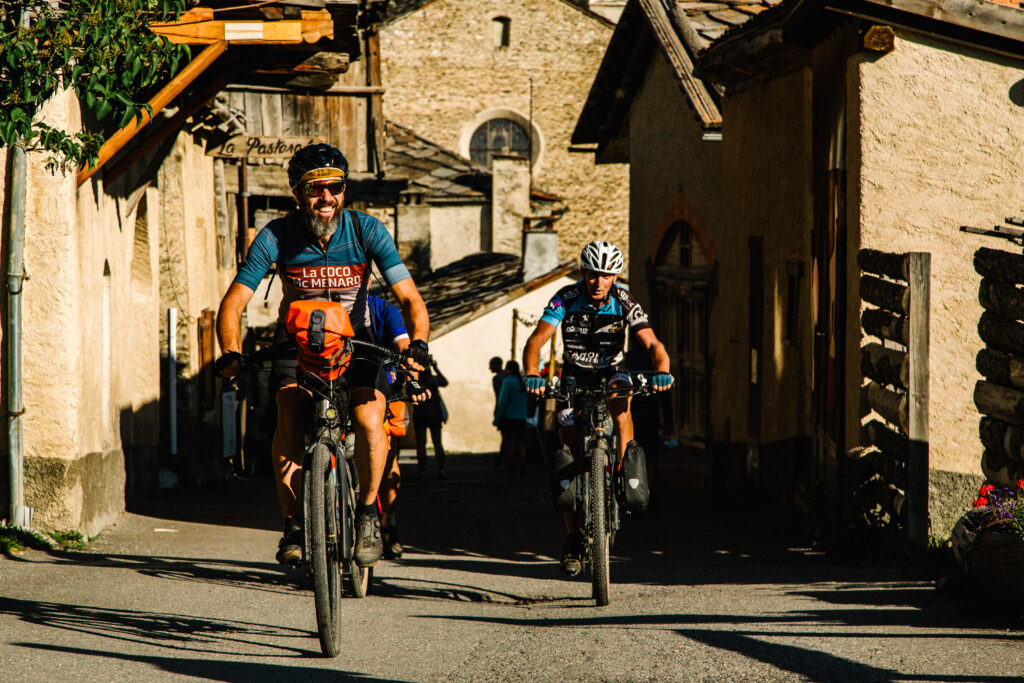
📜 REGULATIONS & AGREEMENT | Half To Peak 2026

Respecting the rules ensures fairness, safety, and preserves the authentic spirit of the adventure. By registering for the Half To Peak, you commit to strictly complying with the event’s regulations and official agreement.

📁 Mandatory Official Documents:

Any valid registration implies the unreserved acceptance of both documents.

🔏 Key Points of the Regulations

1. Registration Conditions & Format

  • 🔞 Minimum Age: You must be at least 18 years old at the time of the start. Minors are not allowed, even if accompanied.
  • 🩺 Medical Fitness: You must be medically fit for ultra-distance efforts. A medical certificate less than one year old is strictly required.
  • 👥 Limited Spots: The event is capped at 100 spots. No application review or vetting process: first come, first served!
  • Authorized Bikes: Only acoustic (human-powered) bikes are accepted. Electric bikes (e-bikes) are strictly prohibited.

2. Total Autonomy (The “Unsupported” Rule)

The principle of self-sufficiency governs the Half To Peak. To ensure everyone plays on a level playing field, no planned outside assistance is tolerated:

  • Authorized Support: Only public services and local businesses accessible to anyone along your route (shops, restaurants, hotels, bike shops).
  • Volunteers & Checkpoints: Volunteers at the CPs are there for your safety and to validate your progress; they are not authorized to provide you with mechanical or personal assistance.
  • Trailside Serendipity: Spontaneous help from people encountered by chance along the route is tolerated, provided it is unplanned and you do not know them beforehand.
  • 🚫 Advance Booking Ban: To preserve the spirit of adventure, it is strictly forbidden to book any accommodation before the start. Once the clock begins, you are free to book wherever you like on a day-to-day basis.

3. Categories: SOLO vs. DUO

  • 👤 SOLO Category: You must be 100% self-sufficient. Sharing gear between solo riders is prohibited, as is planning shared stops or riding in a group over multiple days. The only support allowed between solos is morale (giving a water bottle, a mechanical part, or a patch is forbidden).
  • 👥 DUO Category: This is the only category that allows two riders to ride together at all times. Both team members must register at the same time and must never separate on the trail. If one member scratches (withdraws), the remaining rider may continue the adventure but will be classified as “Off-Event” (unranked).

4. Mandatory Safety

  • 🪖 Helmets are mandatory for the entire duration of the event as soon as you are on your bike.
  • 🦺 High Visibility: Wearing a reflective vest is mandatory at nightfall and during poor visibility conditions (fog, heavy rain).
  • 💡 Lighting: Your bike must be equipped with a powerful and fully functional lighting system (white light in the front, red light in the back).

⏱️ Route Documents Schedule

  • 🗓️ Weekend of July 4–5, 2026: Official release and emailing of the Route Guide and GPX tracks.
  • 📋 This guide will contain the exact locations of the Checkpoints (CPs), their opening and closing times, as well as all last-minute instructions regarding the operation of the live tracking satellite devices.

⚠️ Sanctions and Penalties

The Half To Peak is not a race, but respecting the rules is essential to prevent any unfair advantages among participants. We rely on your sense of fairness, integrity, and respect for the bikepacking philosophy.

Firm Reminder: Any observed breach of the regulations (specifically regarding private assistance or cutting the route) will result in time penalties or immediate disqualification from the event. By registering, you sign a pact of loyalty with the organization and the community.

[Document summarizing these rules – Mandatory reading before registering]

✍️ REGISTER | Half To Peak 2026

Ready to take on the challenge of the Half? Here you will find all the details, pricing, and procedures to secure your entry for this 3rd edition, which will take place from Saturday, July 25 to Sunday, August 2, 2026.

📌 Conditions of Participation

  • 🔞 Age: Must be at least 18 years old at the time of the start (minors are not admitted).
  • 🩺 Health: Must be medically fit for ultra-distance events (mandatory medical certificate).
  • 👥 Categories: Registration is available for SOLO or DUO (pairs).
  • 🛑 Limited Spots: 100 participants maximum. No selection process: first come, first served!
  • 🚀 Single Wave: A single Grand Start on Saturday, July 25, 2026, at 6:30 AM.

💳 Pricing & What’s Included

The registration fee is set at €295 (+ 5% payment platform processing fees).

💡 A note from the organization (non-profit association): The entry fee is identical to the Sea To Peak because the services and perks provided remain exactly the same. Just because there are fewer kilometers doesn’t mean the logistics, trackers, or equipment cost less for the association! No profit is made; our organization relies entirely on your entry fees to exist, without any public subsidies.

Your registration includes:

  • 📟 GPS Tracker Rental: A personal GPS tracker for safety and live tracking, allowing your loved ones to follow your progress in real-time.
  • 🗺️ Official GPX Track: The finalized and official route file.
  • 🧢 Collector Cycling Cap (gapette): Event-branded cap (for registrations completed before May 17, 2026).
  • 🍾 Pre-race Briefing: Held the evening before the start, accompanied by a friendly social drink/aperitif.
  • 📇 Official Roadbook: Used to validate your passage at the Checkpoints (CPs).
  • 👕 Official Finisher T-shirt: Tailored to your size (for registrations completed before June 4, 2026).
  • 🍼 2 Custom TACX Bio Bottles: Personalized, compostable water bottles made in the Netherlands.
  • 📸 Full Logistic Support: The presence of volunteers and coverage by our media team all along the trail.

🛑 To Be Confirmed Before You Start

Before clicking the registration button, you certify that:

  1. You have carefully read the 2026 Info & Regulations Guide as well as the Official Agreement.
  2. You have reviewed the FAQ tab and are fully aware of the sheer physical and technical commitment required by the high mountains.
  3. You sign the loyalty pact and commit to 100% compliance with the “unsupported” rule.

📅 Key Dates & Procedure

  • 🗓️ Registration Opens: Saturday, November 1 at 7:00 PM.
  • 🗓️ Registration Closes: Sunday, July 5, 2026 (or earlier if the 100-spot limit is reached).

👉 [REGISTER FOR THE 3rd HALF TO PEAK] 👈

No. The Half To Peak is a non-competitive ultra-distance event.

There is no podium, no prize money, and no financial reward at stake. Your sole reward will be overcoming an extraordinary route and crossing the finish line surrounded by alpine peaks. Of course, some participants will complete the track at a very fast pace, but every finisher shares the exact same prestige: having conquered the route entirely by their own means.

By registering, you must embrace this philosophy:

Individual Accountability: The organization provides a logistic and safety framework (via the tracking beacon), but it is never a substitute for your own common sense.

Spirit of Independence: You set off under your own responsibility. Your progress, your safety, and your success will depend solely on your choices, your decisions, and your ability to ride self-sufficiently.

Yes, there is a strict time cut-off to be officially recognized as a Finisher.

To validate your event, you must imperatively cross the final checkpoint (CP) in Saint-Véran before Sunday, August 2, 2026, at 8:00 PM.

The math is simple: starting on Saturday, July 25 at 6:30 AM, you have a maximum time limit of 8 days, 13 hours, and 30 minutes to complete the 1,040 km and 24,000 meters of elevation gain ($24,000\text{ m D+}$).

  • Beyond this limit: If you cross the finish line after this time cut-off, you will be considered “outside the time limit” (hors délais). Your satellite tracking will be deactivated, and your finish cannot be officially validated.

Manage your sleep strategy and your pace wisely right from the very first days in Auvergne to keep a safety margin for the Alpine finale!

Yes, but it strictly depends on the category you choose during registration: SOLO or DUO.

If you register in the SOLO category, you must be 100% self-sufficient. You must carry your own gear (bivouac, tools, medical kit) without relying on anyone else.

Here are the rules to follow on the trail:

  • No Permanent Groups in Solo: Forming small, temporary groups as you encounter other riders along the route is tolerated and is part of the charm of ultra-distance. However, riding together for the entirety of the route is prohibited.
  • The Group-Pace Trap: On an event this demanding, trying at all costs to match your pace with others is often a strategic mistake. Everyone’s low points, rest stops, and mechanical issues differ. Forcing a permanent group dynamic puts you at risk of burning out or finishing “outside the time limit.”

👥 The Solution: The DUO Category

The DUO category is the one and only way to legally ride the entire route as a pair:

  • Both team members must register at the same time.
  • The two partners are inseparable throughout the entire route.
  • Please note: If one member of the duo scratches (withdraws), the remaining rider is allowed to continue their adventure to Saint-Véran, but will be classified as “Off-Event” (unranked).

Strict Reminder: It is formally forbidden for anyone outside the organization (friends, family, local club members) to ride alongside you to keep you company, even for just a few kilometers. The route is strictly reserved for official participants.

The principle of being “unsupported” (self-sufficient) is the golden rule of the Half To Peak.

It  means you must rely solely on yourself and on resources that are equally accessible to everyone.

The principle of self-sufficiency is absolute: neither the organization nor your loved ones can intervene in your logistics. You must be capable of managing the entirety of your daily adventure completely on your own.

In concrete terms, you must be 100% independent when managing:

  • Accommodation and Sleep: Finding your own bivouac spots or looking up and booking your own hotel rooms on the go, while on the route.
  • Resupply: Managing your water and food based on the local shops and businesses available along your way.
  • Mechanics and Health: Repairing your own mechanical failures, treating minor physical ailments (wounds, aches), and handling your own navigation.

What is strictly prohibited:

  • Having a support vehicle or a person waiting for you at specific points with clean clothes, food, or spare parts.
  • Benefiting from the assistance of family, friends, or acquaintances along the route (such as pre-booked free accommodation at a relative’s house, trailside mechanical assistance, etc.).

🛒 The only authorized exception: You are allowed to use any commercial or public service that is equally available to all participants (bakery, supermarket, hotel, local bike shop, public water fountain).

By registering, you sign a pact of loyalty: cheating on the unsupported rule distorts the event and destroys the fairness among participants.

[Document summarizing these rules – Mandatory reading before registering]

There is no single perfect bike, but rather a strategic choice to be made based on your own abilities.

The Half To Peak takes place on a massive variety of terrains: you will transition from small asphalt roads and smooth forest gravel tracks to rugged, rocky, and technical mountain singletracks. Your choice should be made by honestly analyzing your strengths and weaknesses:

  • The MTB (Hardtail or Lightweight Full-Suspension): This is the choice for comfort and safety. You will be able to ride through almost anything, save your body from fatigue in the rugged sections of the Massif Central and the Alps, and minimize the risk of mechanical failure. On the flip side, it will be a bit heavier and slower on tarmac or smooth tracks.
  • The Gravel Bike: This will make you fly on the rolling sections and track climbs. However, it will prove to be extremely physically demanding, exhausting for the upper body, and highly technical to handle as soon as the terrain degrades. Hike-a-bike and pushing sections will be more frequent.
  • The “Monster Cross”: This is often the ideal compromise and a popular favorite on this event. It features a gravel or rigid MTB frame equipped with drop bars, but fitted with wide mountain bike tires (widths greater than 2.0″ or 50 mm).

📊 The Verdict from the Trail: During the 2024 and 2025 editions, MTBs and Monster Cross bikes made up the vast majority of the fleet. Do not underestimate the roughness of mountain trails: over 1,040 km and 24,000 meters of elevation gain ($24,000\text{ m D+}$), comfort is the number one factor for speed and success.

Whichever you choose, opt for very easy gear ratios (granny gears) to ensure you can climb steep gradients at high altitudes with a fully loaded bike!

The golden rule : aim for the easiest gears possible. You will never find yourself with gears that are “too short” in the mountains, but you will very quickly come to a grinding halt if your gearing is too big.

The Half To Peak is a mountainous route passing through highly hilly ranges. With 24,000 meters of elevation gain distributed over 1,040 km, the climbs are steady, sometimes very steep, and can stretch over several kilometers (such as the ascents of Mont Ventoux or the Col de Valbelle).

Do not forget that you are not riding an unladen bike:

  • Your bike will be loaded down with your bikepacking bags (sleep system, spare clothes, tools, medical kit).
  • On top of that, you must factor in the weight of water (often 1.5 to 2 liters in remote areas or during high heat) and food.
  • With the fatigue accumulating day after day, pushing a big gear ratio becomes a physical nightmare for your knees and your back.

⚙️ Our Gearing Recommendations:

  • If you ride an MTB (1x / Single Chainring): A 30 or 32-tooth chainring maximum in the front, paired with a 10-51 or 10-52 cassette in the rear.
  • If you ride a Gravel / Monster Cross (1x / Single Chainring): Do not set off with a road chainring. Opt for a front chainring of 36 or 38 teeth maximum, with a very wide rear cassette (11-42, 11-46, or ideally a “Mullet” setup with a 10-50/52 MTB cassette).
  • If you ride a Double Chainring (2x): A sub-compact crankset (such as a 46-30) paired with a 34 or 36-tooth cassette in the rear is the bare minimum required.

Testing your fully loaded bike in its exact race configuration on real climbs before the start is absolutely essential to validate your choice!

A broken bike often means a sudden end to your adventure. Over a 1,040 km course through rocks and rugged mountains, your rig is going to take a beating: anticipation is key.

Riding over rough terrain, through dust or mud, and with the added weight of your bags puts immense stress on your gear. Your drivetrain, tires, and brakes will be pushed to their absolute limits.

🛠️ Your Obligations Before the Start:

  • A Full Service: Never set off on a whim. Your bike must undergo a comprehensive overhaul, either done by yourself or a professional mechanic. Remember to check chain wear, cable conditions, bearings, and perform a brake bleed.
  • Reliability Over Novelty: Do not swap out major components the night before the grand start. Ride with reliable, robust gear that you have already thoroughly tested and broken in during long rides in your full race configuration.
  • Anticipating Wear and Tear: Even if they are brand new at the start, some consumables (like brake pads) wear down at lightning speed in wet weather or during long Alpine descents. Always pack spare parts that are perfectly compatible with your specific bike model.

🚴‍♂️ Your Skills on the Trail: Under the “unsupported” rule, you must be capable of diagnosing and repairing common mechanical breakdowns entirely on your own:

  • Knowing how to fix a broken chain (using a quick-link).
  • Managing punctures (tubeless plugs/bacon strips, installing a emergency inner tube, boots for a slashed tire sidewall).
  • Changing brake pads and indexing a stubborn derailleur.

🔧 The Local Wildcard: If a mechanical failure exceeds your skill level or the tools you carry, you are allowed to stop at any bike shop or repair workshop located directly along the route to seek help. It is entirely up to you to manage the logistics of getting there.

The route is resolutely off-road oriented (MTB / Off-Road). Forget about asphalt; you will be spending the vast majority of your time on dirt and gravel trails.

The track is a living entity that evolves with the regions you cross. You will swing from one extreme to the other, which is exactly what makes this adventure so beautiful and varied:

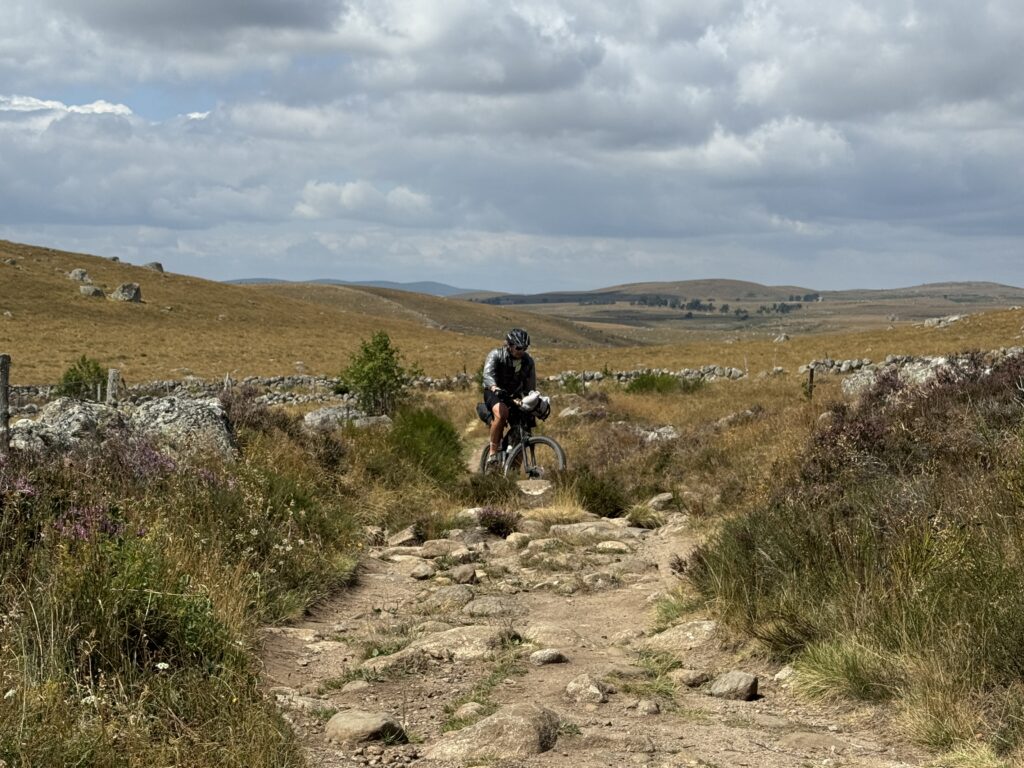
  • The Heart of the Route (Off-Road): A mix of wide, smooth forest or agricultural gravel roads, mountainous fire roads (DFCI tracks), and narrow, rugged, rocky, and sometimes technical mid- to high-mountain singletracks.
  • Transition Zones: To give you a much-needed breather and help you tick off the kilometers, the route regularly utilizes forgotten back country roads, bike paths, or greenways.

🌍 Different Regions, Different Terrains

Keep in mind that you are crossing half of France, and the nature of the ground changes constantly:

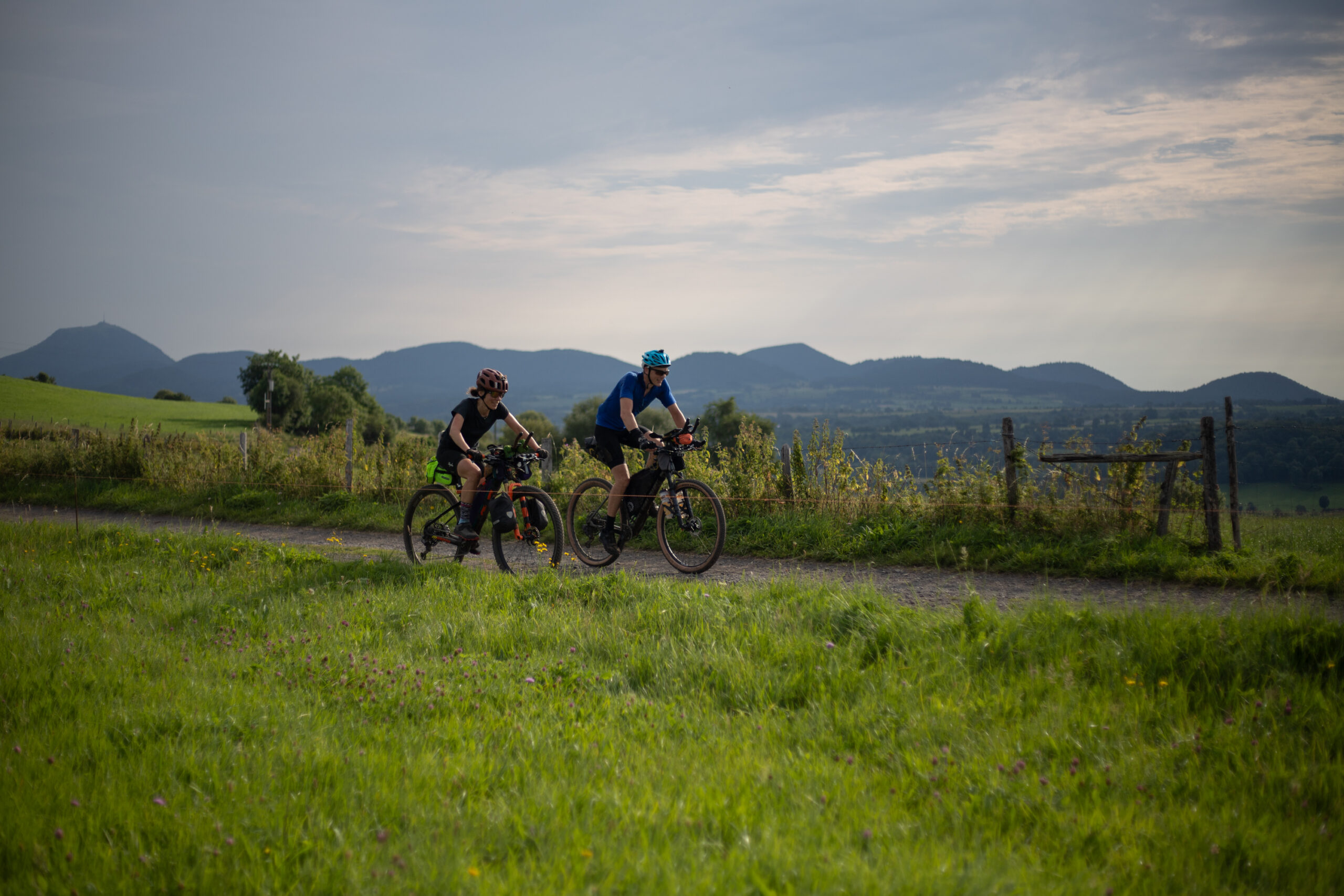
  • Auvergne and the Massif Central: Breathtaking volcanic gravel tracks, crossings of grassy plateaus (Aubrac, Cézallier) that can be a bit bumpy and jarring, and forested sections in the Margeride. The elevation profile here is wearing and relentless, acting like a non-stop roller coaster.
  • The Alpine Turn and the Peaks: As soon as you cross the Rhône Valley, the terrain enters a new dimension. Climbs become massive (several hours of continuous climbing like Ventoux or Valbelle). The gradients are steeper over shorter distances, and the ground becomes typically alpine: loose shale, rocky, and technically demanding—especially on the descents.

💡 Pacing Tip: Don’t burn through your matches on the “easy,” rolling sections. Keep some energy in reserve, because the high mountains will force a much slower pace and demand constant focus and handling skills.

Navigation is done exclusively using a GPX track that you must load onto your navigation device (bike GPS computer or a dedicated smartphone).

To preserve the spirit of discovery and the excitement of adventure, the finalized track will be shared by email at least 10 days before the start.

📱 Your Technical Obligations:

  • Total Mastery of Your Device: It is imperative that you know the operation of your GPS or navigation app (Komoot, RideWithGPS, Garmin, Wahoo, Hammerhead, etc.) inside and out. You must know how to load a track, restart a route mid-ride, zoom in/out efficiently, and manage battery life.
  • Self-Orientation Skills: In the high mountains or isolated forests, you must be capable of making the right decisions if you lose the track or if a trail is temporarily blocked.

⚠️ The Organization’s Observation: Every year, we see too many riders take the start without fully mastering their GPS devices. This is the number one cause of routing errors, frustration, lost time, and wasted energy.

Mastering your navigation is just as crucial as your physical training. Do not overlook this point: the Half To Peak moves through demanding mountain terrain that leaves no room for guesswork. Test your gear in real-world conditions—both day and night—well before the grand start!

Energy management is a core pillar of ultra-distance riding. Since the clock never stops, you must be fully self-sufficient to recharge your safety and navigation devices. Two main options are available to you:

Dynamo Hub: Utilizing a dynamo hub (such as a SON hub) coupled with a USB charger, which is the ideal setup for long-haul self-sufficiency.

Power Banks: Carrying one or more high-capacity external batteries (minimum 10,000 to 20,000 mAh), which you can plug in and recharge during your stops at shops, restaurants, or hotels.

Navigation is done exclusively using a GPX track that you must load onto your navigation The choice is entirely up to you, as long as you comply with the regulations! Since booking accommodations before the start is strictly prohibited, you must choose your strategy:

Bivouac Option (Tent, Tarp, or Bivy): This option offers total freedom to stop whenever and wherever you want, especially in the remote areas of the Massif Central or the Alps. However, make sure to strictly respect the local bivouac and camping regulations of the natural parks you cross.

Hotel / Gîte / Campsite Option: For those who prioritize comfort and optimal recovery. You will need to look up and book your spots on the go each day, depending on your progress.

Scratching is a part of ultra-endurance, but it must be handled properly. If you decide to call it quits, you must imperatively:

Handle Your Own Repatriation: The organization does not manage or coordinate the return of participants or their bikes. You must find your own way to the nearest train station.

Return the GPS Tracker: The return procedures (either via mail or by dropping it off with the organization) will be detailed in your route guide.

Notify the Organization Immediately: Send a text message or call the race director right away (the emergency/race control number is provided in your roadbook).

Expect any and all extremes! Starting directly from the heart of the Massif Central and finishing at the top of the Alps exposes you to radical and lightning-fast weather changes.

Unlike longer cross-country events, you won’t have a smooth transition through western plains. Right from the opening kilometers, you will be riding at elevation. You must be equipped to face two completely opposite climatic realities:

☀️ 1. Scorching Heatwaves (The Valleys)

During valley transitions—especially when crossing the Rhône Valley (south of Bollène) and through Drôme Provençale—the thermometer can easily skyrocket, exceeding 35°C or even 40°C in the shade.

  • The Challenge: Managing continuous hydration, coping with the complete lack of shade on the trails, and enduring the sun’s harsh reflection on the exposed limestone of Mont Ventoux.

🥶 2. Freezing Cold and Frost (The Peaks)

You will spend a large portion of the event at an average altitude of 900 meters, with iconic climbs peaking at 2,000 meters (Saint-Véran) and 2,400 meters (Col de Valbelle). At these elevations, even in the dead of summer, nights and late afternoons can be freezing.

  • The Challenge: Temperatures can drop close to 0°C, with risks of morning frost on the Aubrac plateaus or in the high mountains.

3. Violent Mountain Thunderstorms

This is the primary hazard in July and August over the Massif Central and the Alps. In the late afternoon, fueled by the daytime heat, extremely violent storms can roll in out of nowhere. They are frequently accompanied by heavy hail, fierce winds, and a sudden 15°C temperature drop in just a matter of minutes.


🧥 The Organization’s Advice: Your clothing system must be modular and highly technical. Do not skimp on sunblock and high-capacity water bottles, but do not compromise on a high-quality waterproof cycling jacket (such as Gore-Tex), long-finger gloves, thermal layers, and an emergency space blanket either. The mountains do not forgive a lack of preparation.

💬 Still have a question?

If you haven’t found the answer to your question, don’t panic! The spirit of the Sea To Peak is also all about mutual support and sharing experiences.

  • Connect with the Community: To chat with riders from previous editions and gather expert tips from veterans on gear, sleep management, or gear ratios, join the Facebook group Erminig Cycling Club! It is the perfect place to ask the community’s enthusiasts your questions.
  • Contact Us Directly: If your inquiry concerns the organization or a specific administrative point, feel free to send us an email. We will do our best to get back to you as quickly as possible.

See you very soon on the trail!