
July 18th to August 2rd 2026
French diagonal from
the atlantic ocean to the Alps
2280 km
+/-
42000m de D+
Off-Road unsupported
bikepacking adventure
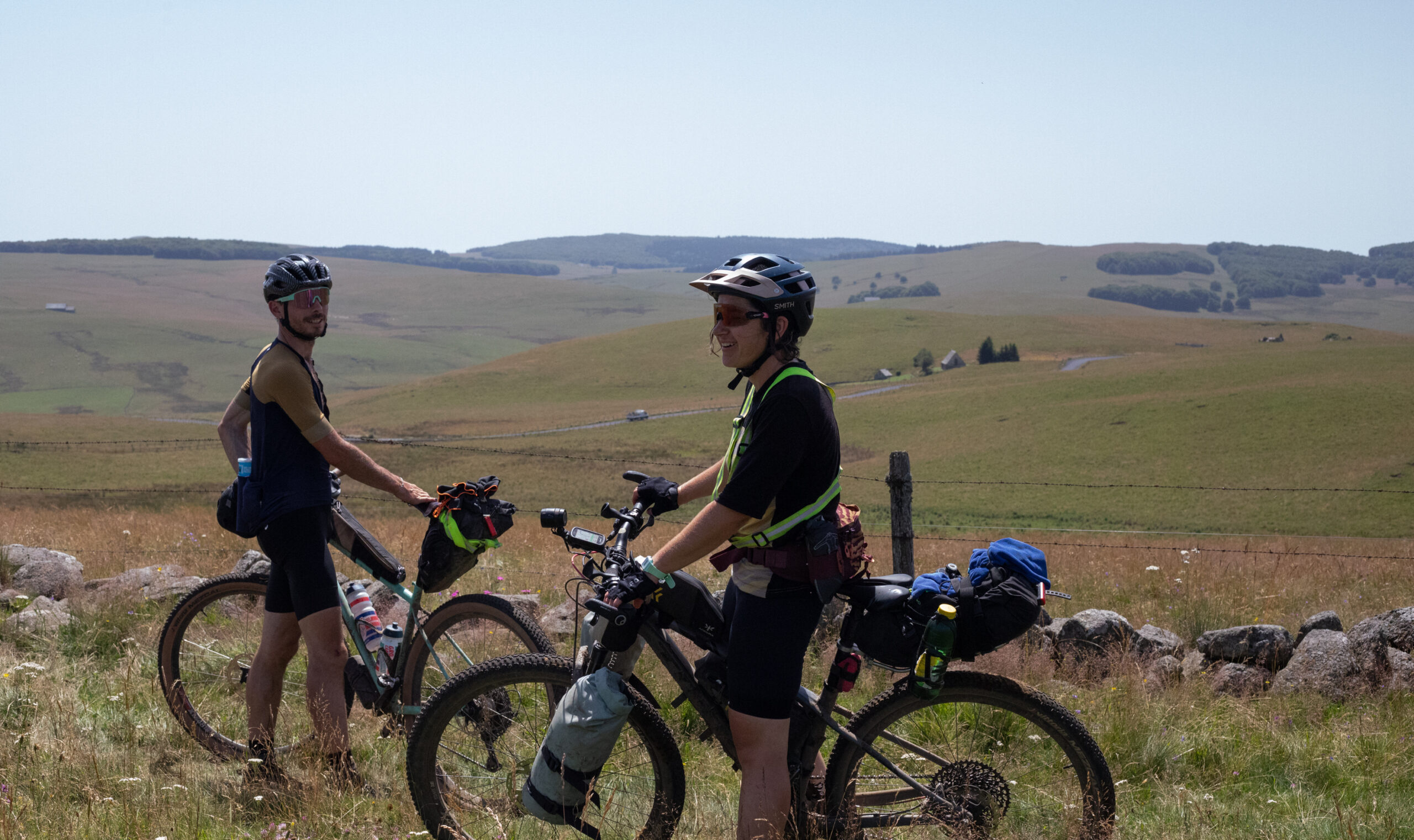
A fully self-sufficient, off-road ultra-distance event. France’s other “Divide”: a wild, unsupported journey of over 2,200 km, launching from the rugged tip of Brittany all the way to the heart of the Alps. An extraordinary human and physical adventure.
Sea To Peak 2026: The Ultimate Off-Road Ultra-Distance
The Sea To Peak is no ordinary bike tour; it is a true French-style “Divide.” A monumental west-to-east crossing, linking the ocean to the stone giants. Riding in pure bikepacking mode and completely unsupported, you are about to challenge both geography and your own limits.
🗺️ The Concept: A Route Between Two Extremes
- The Connection: From the westernmost point of continental France to the highest village in Europe.
- 3 Massifs, 3 Geological Eras: The Armorican Massif, the Massif Central, and the Alpine Massif.
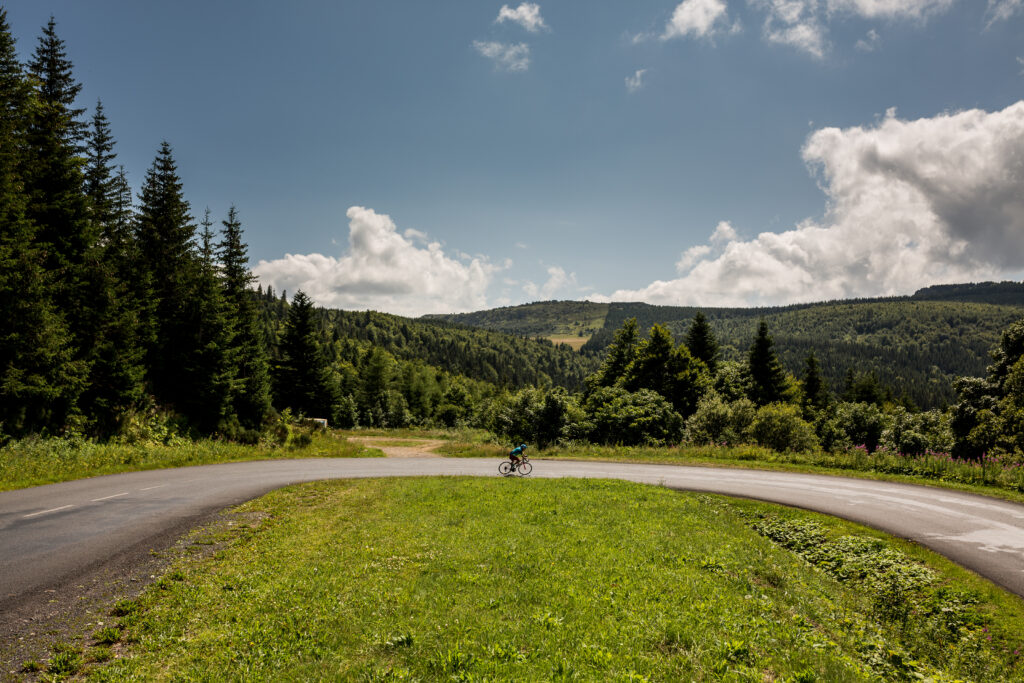
- The Profile: More than half of the route unfolds through mid-mountain terrain (average altitude around 900 m) before a grueling final stretch in the high mountains, culminating in a pass at an altitude of 2,400 m.
📑 Our Founding Principles
Bikepacking (Total Self-Sufficiency) • Ultra-distance • Unsupported • Non-competitive • Non-Stop Progression • Live Tracking
📅 2026 Edition: From July 18th to August 2nd
For its 6th edition, the Sea To Peak is back, more beautiful than ever… and just as demanding!
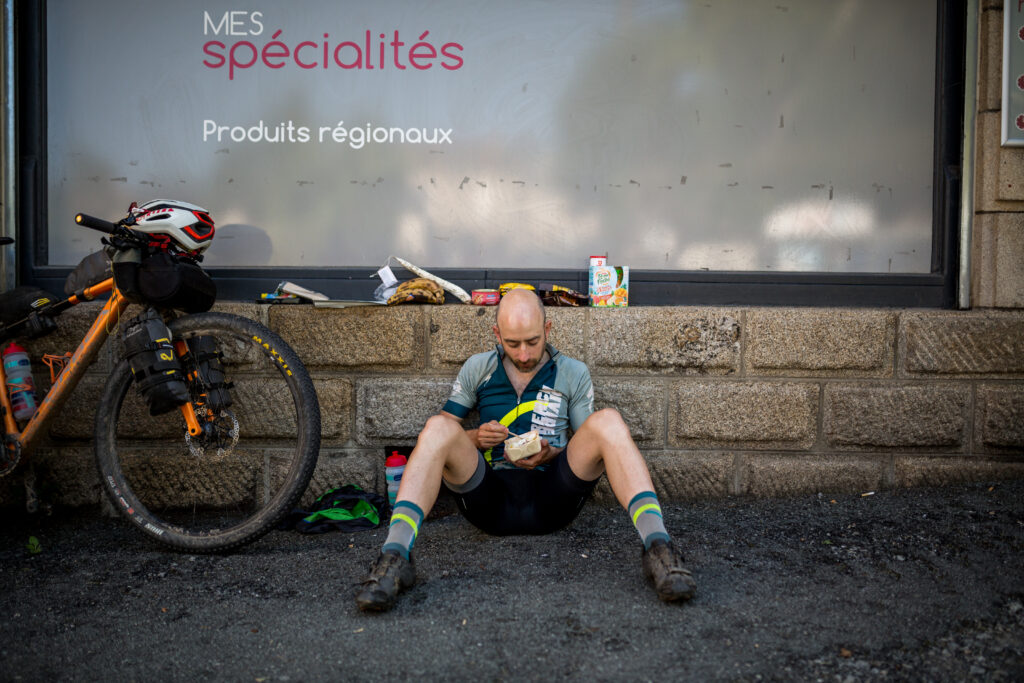
- The Challenge: A maximum of 16 days to cross France via off-road tracks. The only “opponent” here is yourself. This is not a race, but a test of extreme endurance requiring total physical and mental commitment.
- Time Management: The clock never stops ticking. You are the sole master of your own strategy, sleep schedule, and rest stops.
⚙️ Event Details & Logistics
The Timing:
- Mass Start: Saturday, July 18th, 2026, at 6:40 AM (one single start for everyone).
- The Finish: You must cross the final checkpoint before Sunday, August 2nd, 2026, at 8:00 PM (a maximum of 16 days). A magical finish line nestled deep in the Alpine peaks that will stay with you forever.
Navigation & Compliance: Strictly following the provided GPS route is mandatory. Physical or virtual checkpoints (CPs) will be set up by the organization to validate your ride.
Safety & Live Tracking: Every participant will be equipped with a MadCap GPS tracker. Your loved ones and “dotwatchers” will be able to follow your progress in real-time, minute by minute.
2026 Categories: Take on the challenge SOLO or as a DUO.
⚠️ Important: Adventure is calling ? Before taking the first step, reading the Rider’s Guide is mandatory. It contains crucial technical and regulatory information essential for your safety and the success of your journey.
The Route: A Monumental West-to-East “Divide”
After 5 legendary editions, the Sea To Peak route has established itself as one of the most demanding and rewarding off-road challenges in Europe.
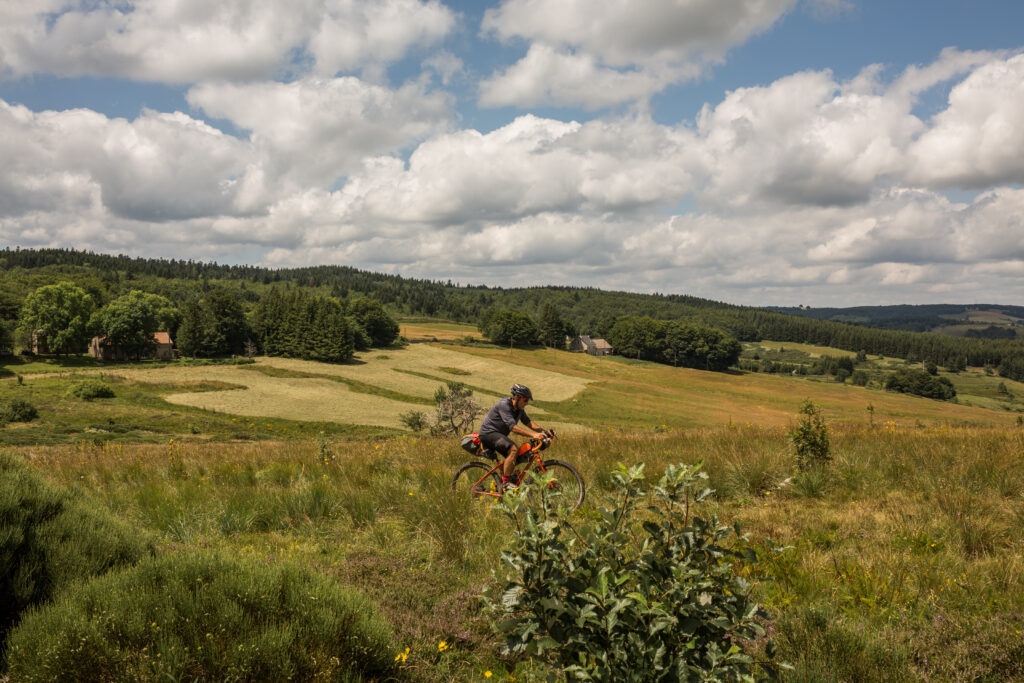
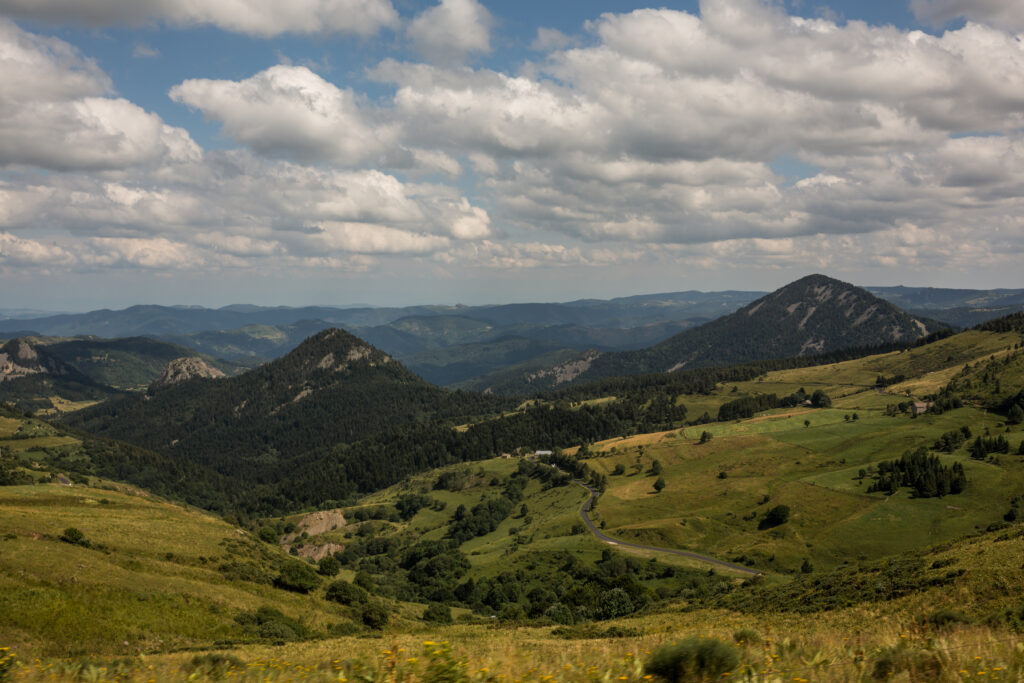
The 2026 edition keeps the highly acclaimed backbone of the 2024 and 2025 routes—a track praised by the community as magnificent and perfectly balanced—while introducing a few micro-adjustments and one major new feature. On this journey, every physical hardship is rewarded with an unforgettable panorama or an instant-classic singletrack.
🗺️ The Diagonal by the Numbers
To cross France via off-road tracks is to experience its incredible diversity:
- 3 Geological Massifs: The Armorican Massif, the Massif Central, and the Alpine Massif.
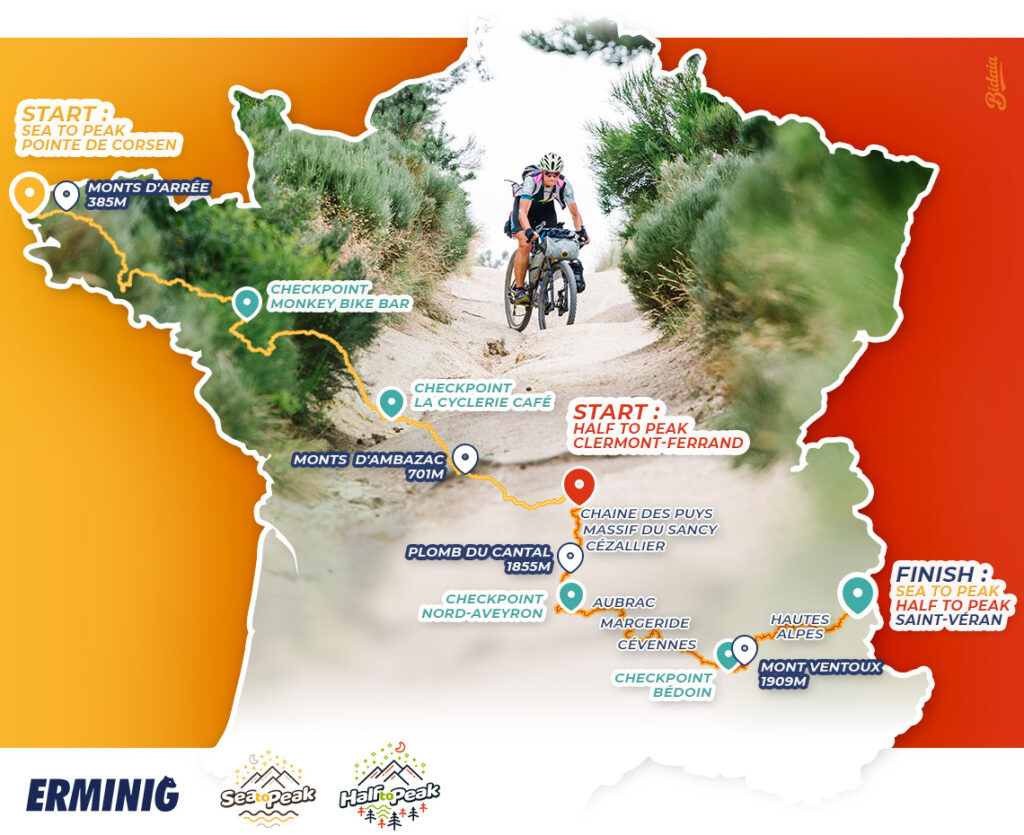
- 5 Regions & 18 Departments crossed: From the deep heart of Brittany to the high mountains, passing through Loire-Atlantique, Deux-Sèvres, Poitou, Haut-Limousin, Creuse, Puy-de-Dôme, Cantal, Aveyron, Lozère, Ardèche, Drôme, and Hautes-Alpes.
⛰️ A Challenge of Peaks and Contrasts
The route creates a highly symbolic link between two geographic “extremes” in France:
- The Start: Pointe de Corsen (Plouarzel, Finistère – 29). The westernmost point of continental France (located 30 km from the Brest TGV train station). The town welcomes us for the briefing and pre-ride check-in, facing the vastness of the Atlantic Ocean.
- The Finish: Saint-Véran (Hautes-Alpes – 05). The highest village in Europe, perched at an altitude of 2,042 meters in the heart of the Queyras valley. A sanctuary of stone and wood that has warmly welcomed finishers since 2021.
The Great Milestones of Your Journey:
- Col de Valbelle: The highest point of the Sea To Peak, towering above Risoul at an altitude of 2,400 meters.
- The Mystical Monts d’Arrée: Your very first climbs on Breton soil.
- Monts d’Ambazac: A technical section peaking at 701 meters.
- Plomb du Cantal: The roof of the Cantal massif.
- Mont Ventoux: A legendary climb via off-road tracks, featuring a brand-new, never-before-ridden route for 2026!

⚙️ Terrain Profile & Gear Recommendations
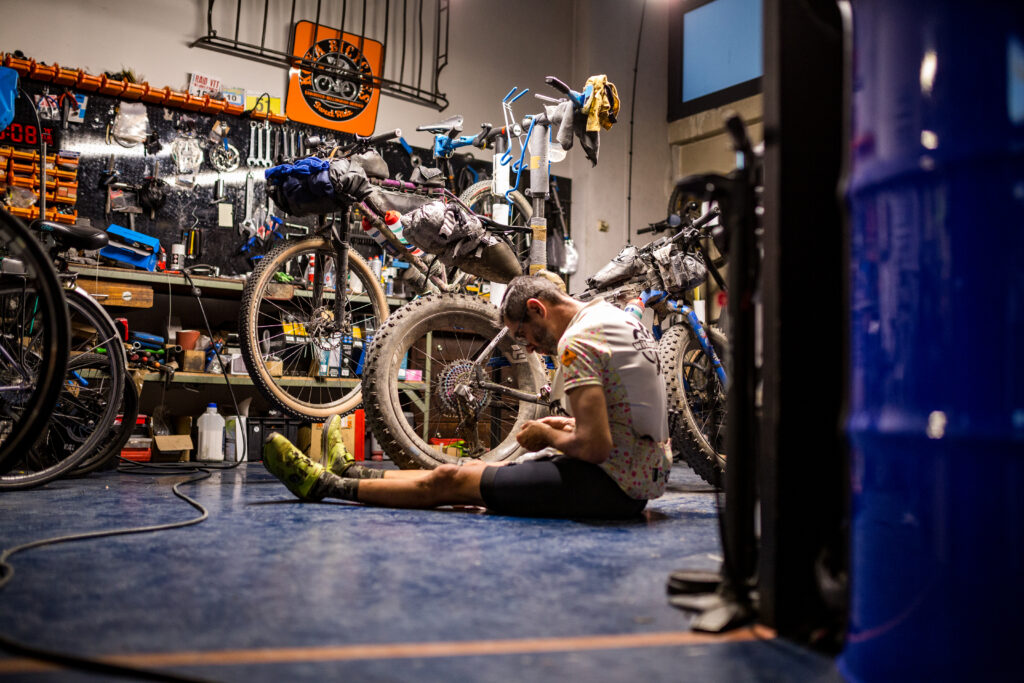
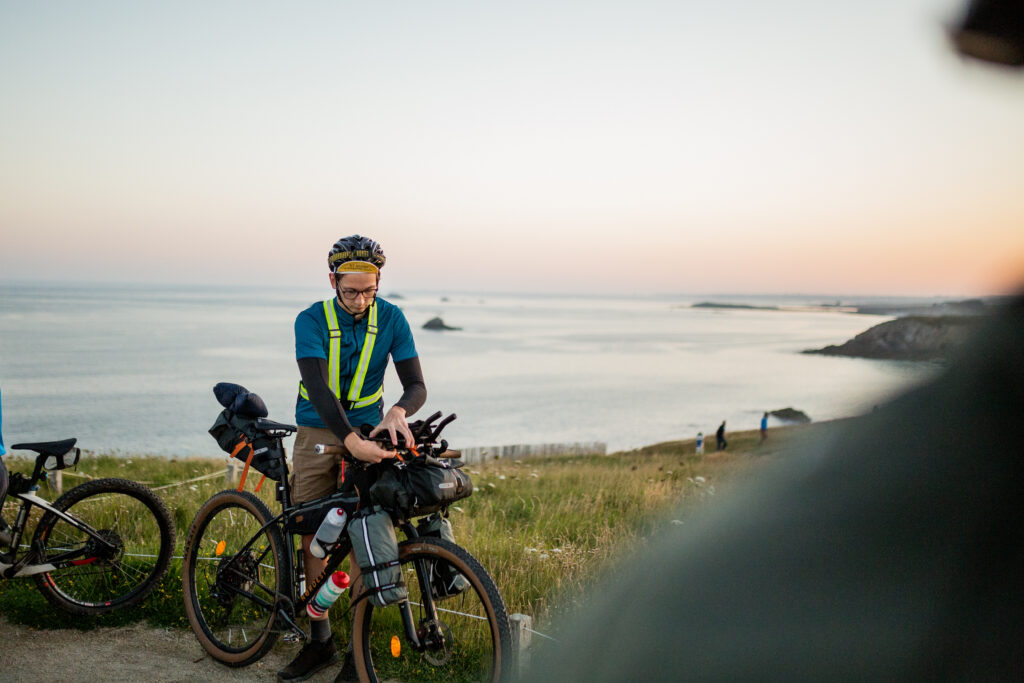
The Sea To Peak is a resolutely off-road oriented event. Your choice of steed (a front-suspension MTB or an ultra-robust Gravel bike) and your equipment must be dictated by your physical and technical abilities.
- Technicality: The terrain varies widely, ranging from forgotten backroads to technical, rocky, and unforgiving mountain singletracks.
- Elevation Gain: The profile is massive. The route cuts through the Massif Central from north to south before tackling the Alps.
- Altitude: From the halfway mark onwards, you will be riding through mid-mountain environments. The average altitude hovers around 900 meters, and the route rarely drops below 600/700 meters, right up until the final high-mountain showdown at 2,400 meters.
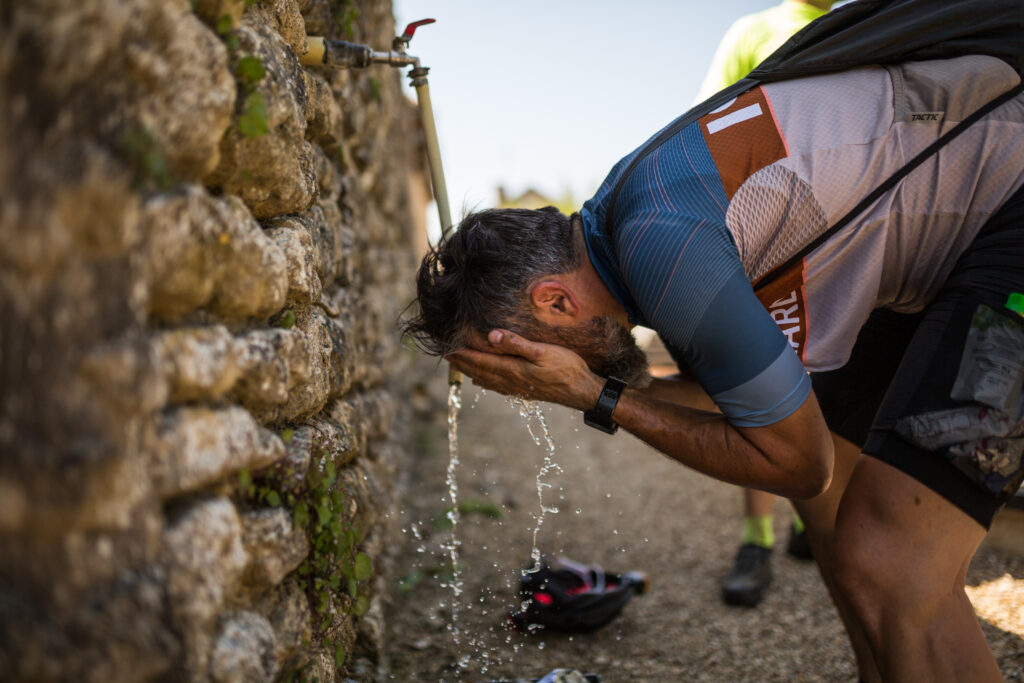
⚠️ Weather Alert: In the mountains, conditions can shift in a matter of minutes. Every participant must be fully equipped to handle sudden drops in temperature, violent thunderstorms, or freezing conditions at high altitudes.
🏁 Validation & Logistics
- GPS Tracks: The official and final GPX track will be emailed directly to you a few days before the mass start.
- 4 Checkpoints (CPs): Strategically placed along the route to validate your progress.
Rider’s Guide & Official Regulations
This document brings together the fundamental rules of the Sea To Peak. Registering for the event implies full and unreserved acceptance of these regulations and the official agreement.
📥 Reference Documents :
- The complete, detailed regulations are available in the [Download the Rider’s Guide here].
- The official event agreement can be viewed at this address: [Link to the Agreement].
- Please read these documents carefully before registering.
1. Eligibility Conditions & Registration
- Age Requirement: Participants must be at least 18 years old at the time of the start (the event is strictly forbidden to minors, even if accompanied).
- Medical Fitness: A medical certificate is no longer mandatory. You must ensure that you are in perfect health before taking the start.
- Spot Allocation: No selection based on applications; spots are allocated on a “first-come, first-served” basis.
- Capacity: The event is strictly limited to 100 riders.
2. Category Management: SOLO vs. DUO
To guarantee fairness for everyone, progression rules are strict:
👥 DUO Category :
- Both team members must register simultaneously.
- Partners must never separate during the event.
- In the event of a retirement: The remaining rider may continue the adventure, but they will be reclassified as “Outside the Event” (Hors Épreuve).
👤 SOLO Category :
- You must be 100% self-sufficient. No sharing of gear or tools is allowed between participants.
- It is forbidden to plan joint stops or to ride together with the same participant over multiple days.
- The only assistance allowed between Solo riders is moral support. Exchanging a water bottle, an inner tube, or a patch is strictly prohibited.
3. The Principle of Total Self-Sufficiency (Unsupported)
The Sea To Peak is a fully self-sufficient event. The rules apply equally to everyone to ensure perfect fairness:
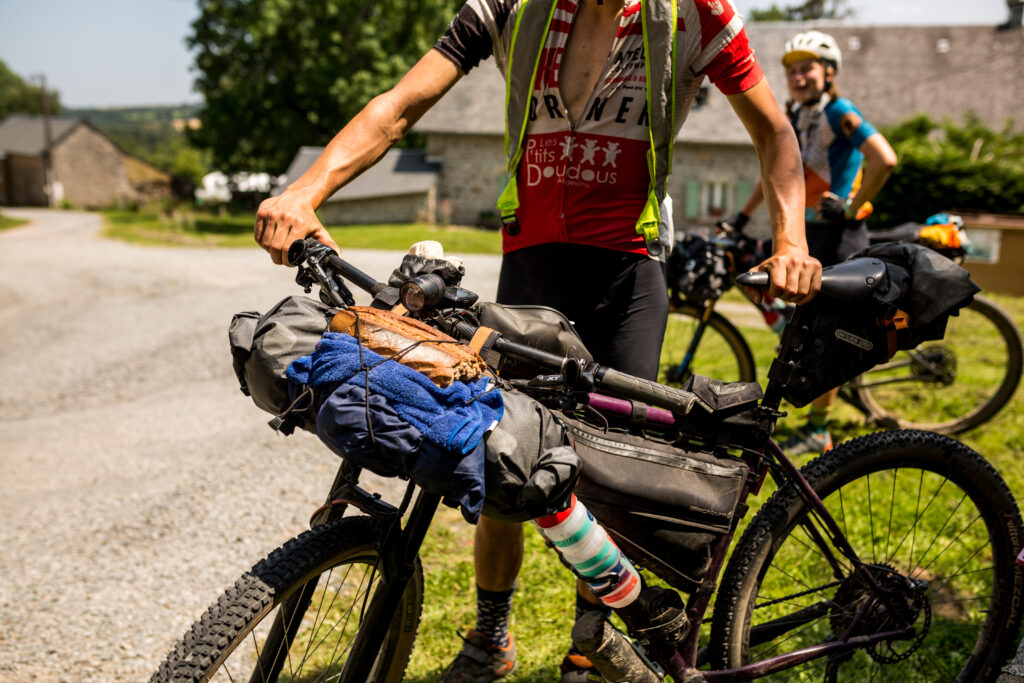
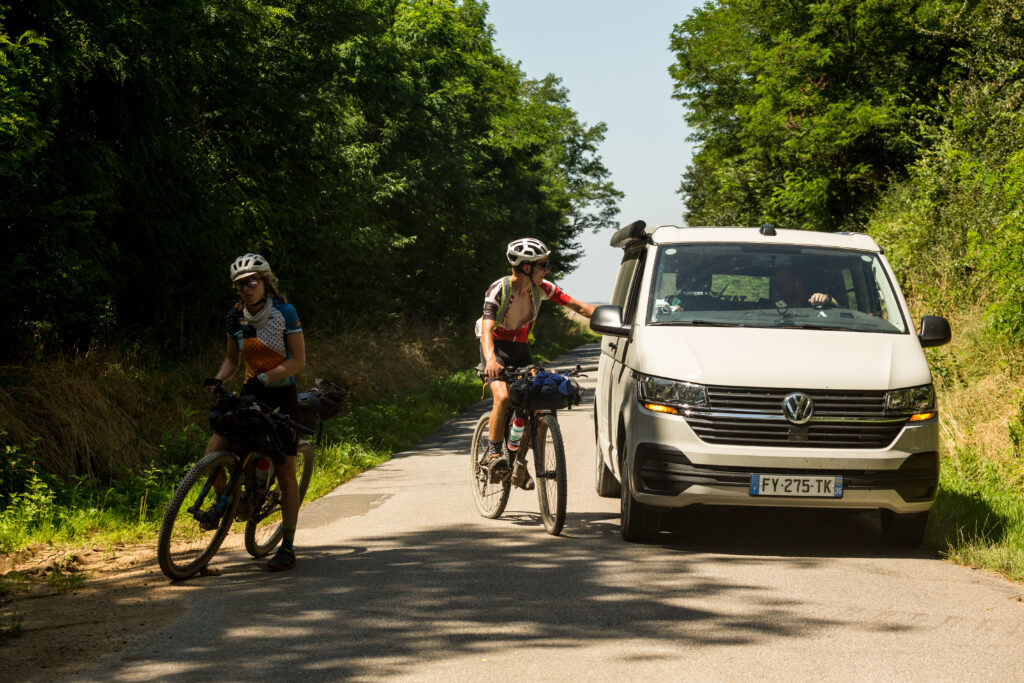
- ✔️ What is allowed: Any commercial infrastructure found by chance along your route and accessible to everyone (shops, restaurants, hotels, bike shops). Spontaneous, local human assistance (unplanned encounters on the route) is tolerated, provided it is not pre-arranged.
- ❌ What is forbidden:
- Any private assistance or support vehicle (family, friends).
- Logistical or technical help from volunteers at the Checkpoints (they are there to validate your passage, not to assist you).
- No advance bookings: To preserve the spirit of adventure, it is strictly forbidden to book accommodation before the start. Given weather and mechanical unpredictable events, no plan survives. You must book your nights day by day, once the start has been given.
⚠️ Sanctions: We rely on everyone’s loyalty and sportsmanship. Any breach of the “unsupported” rule will result in time penalties up to immediate disqualification.
4. Safety, Equipment & Road Regulations
The clock never stops ticking, but your safety remains the absolute priority.
Mandatory Equipment (Checked at the start):
- Certified helmet (must be worn whenever the bicycle is in motion).
- High-visibility vest (mandatory at nightfall or in low-visibility conditions).
- Compliant lighting: A powerful white headlight at the front and a red light at the back.
Authorized Bikes: Only 100% human-powered bicycles are accepted. Electric bikes (E-bikes/EPACs) are strictly forbidden.
- Mandatory Briefing: Your presence is mandatory at the pre-ride briefing on Friday late afternoon (the day before the start).
- The Start: Mass start on Saturday, July 18th, 2026, at 6:40 AM.
🗺️ Route Guide & GPS Tracks
Do not worry about the route just yet: the Route Guide and the final GPX tracks will be emailed to you on the weekend of July 4th–6th, 2026.
This logistical document will also include all crucial information regarding the Checkpoints (exact locations, opening and closing times, etc.).
Register for the Sea To Peak 2026
Ready to take on the challenge of the 6th edition? The adventure will take place from Saturday, July 18th to Sunday, August 2nd, 2026. Don’t wait too long: spots are highly sought after and strictly limited to ensure everyone’s safety and tracking.
📋 Participation Conditions
- Age Requirement: You must be of legal age (18 or older) at the time of the start.
- Medical Fitness: You must be medically fit for off-road ultra-distance cycling.
- Categories: Registration is available as SOLO or DUO.
- Allocation: No selection process based on applications. Spots are allocated on a “first-come, first-served” basis.
- Quota: Strictly limited to 100 participants.
💳 Pricing & What’s Included
The registration fee is €295
Your registration pack includes:
- 🛰️ The GPS Tracker: Rental of a tracker for live tracking (for safety, organization, and loved ones) via a dedicated app.
- 🗺️ Navigation: The official and exclusive GPX route of the event.
- 🎒 Goodies: 2 custom Tacx Bio water bottles (compostable, made in the Netherlands) featuring the Sea To Peak design.
- 🧢 The Collector’s Cap: Free for any registration validated before May 17th, 2026.
- 👕 The Finisher T-shirt: In your size, included for any registration validated before June 4th, 2026.
- 🍻 Pre-Race Event: The official briefing followed by a friendly pre-ride drink on Friday evening (the night before the start).
- 📑 Logistics: Your physical Roadbook to manually stamp your passage at the various Checkpoints (CPs).
- 🧡 Support: The presence of our passionate volunteers on the ground and coverage by a dedicated media team.
⚠️ Before Validating Your Registration
Off-road ultra-distance is an extreme commitment. By checking the registration box, you certify that:
- You have carefully read the 2026 Rules & Information Guide as well as the Agreement (registration acts as your signature and full acceptance of these documents).
- You have consulted the FAQ tab and fully understand the physical and technical commitment required by the Sea To Peak.
- You pledge on your honor to strictly respect the absolute rule of “zero assistance“ (unsupported).
⏳ Key Dates & Registration Link
As the main registration platform is now closed, you can register directly with our association from saturday, July 4th until Wednesday, July 15th.
Important Conditions (Please read before registering):
- Direct Registration: You are registering directly through this form, bypassing the NJUKO platform. This means no platform booking fees for you!
- Fixed Rate: The registration fee is 295 Euros, payable exclusively via bank transfer.
- Cancellation Insurance: Please note that this direct registration does not include cancellation insurance.
- Immediate Payment: The bank transfer must be completed as soon as you submit this form.
Next Step:
Once you have filled out this form, we will email you the association’s bank details (RIB/IBAN) so you can process the €295 transfer. Your registration will be officially confirmed only upon receipt of your payment.
💬 Still have a question?
If you haven’t found the answer to your question, don’t panic! The spirit of the Sea To Peak is also all about mutual support and sharing experiences.
- Connect with the Community : To chat with riders from previous editions and gather expert tips from veterans on gear, sleep management, or gear ratios, join the Facebook group “Erminig Cycling Club“! It is the perfect place to ask the community’s enthusiasts your questions.
- Contact Us Directly : If your inquiry concerns the organization or a specific administrative point, feel free to send us an email. We will do our best to get back to you as quickly as possible.
See you very soon on the trail!